WHAT DOES IT MEAN TO BE NEURODIVERGENT?
Do you feel you are different from what our society considers “normal”?
Do you have social anxiety when in situations where you are not prepared with rehearsed responses?
Do you have difficulty sustaining attention, focus, concentration?
As a child did you have a pattern of learning difficulties related to reading, writing, spelling, and language processing?
Do you “mask” or behave differently in public then with people you trust to accept you ?
Do you have heightened sensory stimulation?
Could being neurodivergent explain some of your lifelong experiences?
Have you considered the possibility that you might be on the autism spectrum?
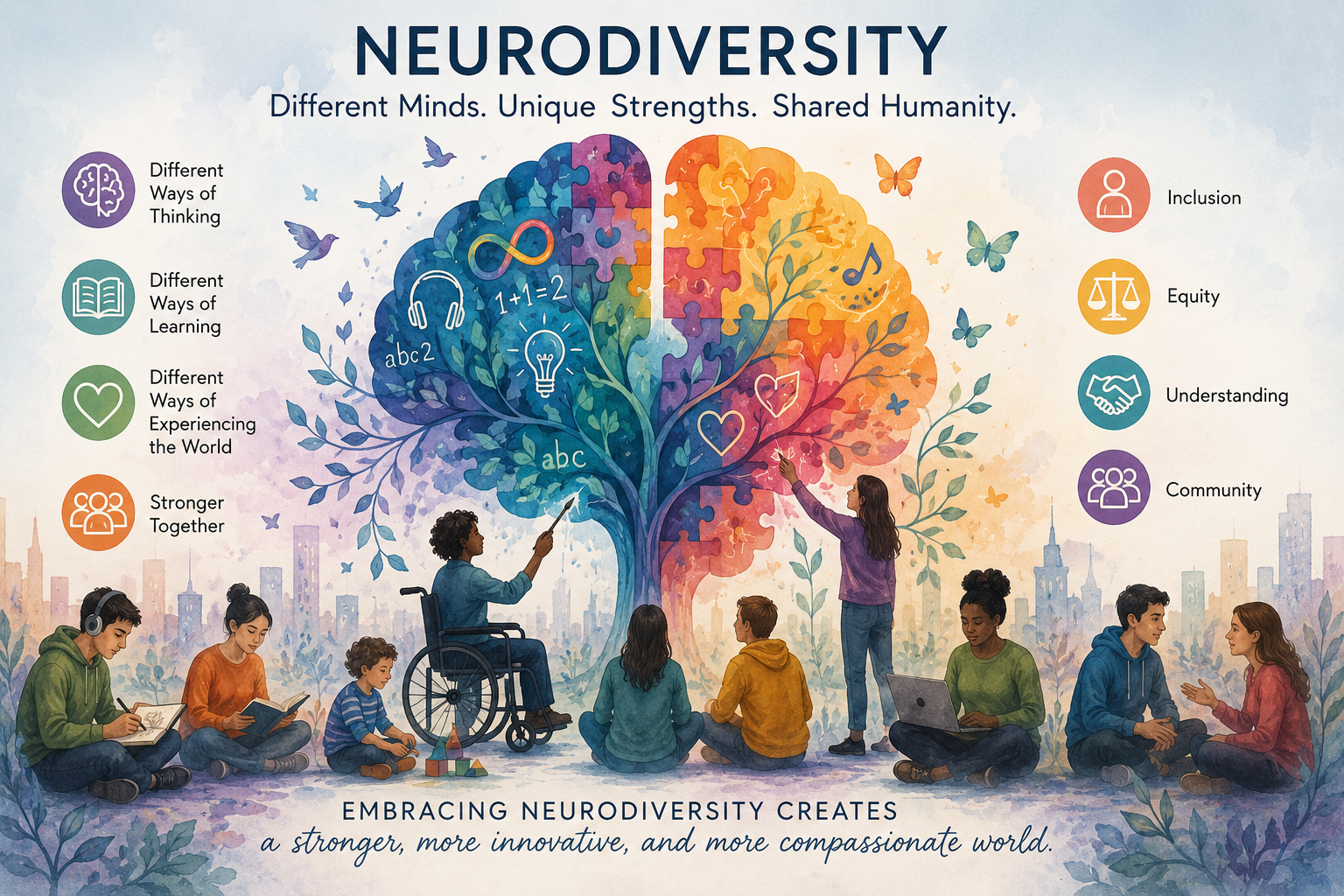
Neurodiversity is an important concept that acknowledges variation and diversity of human brains and minds, recognizing that conditions such as autism, ADHD, dyslexia, and others are part of the natural spectrum of human variation. Rather than viewing neurodivergent individuals as needing to be “fixed” or having a “disorder” a holistic perspective celebrates the unique strengths and challenges of human lived experience. Embracing diversity leads to cultural inclusion, equity, and the experience of community. At present our social norms often limit access to workplace or learning accommodations for neurodivergent individuals.
Understanding neurodiversity involves embracing different ways of thinking, learning, and experiencing life.
The Importance of a Clinical Specialist Evaluation
A comprehensive psychiatric evaluation conducted by a clinician with specialized training in ADHD, autism, learning difficulties and developmental differences is an essential first step toward understanding an individual’s unique strengths, challenges, and psychosocial support needs.
Variation in brain development occurs across age, gender, culture, and life experiences. An ongoing observational and developmental assessment based approach leads to an accurate diagnosis.
A comprehensive clinical specialist evaluation can:
Provide an accurate diagnosis
by distinguishing between conditions with overlapping characteristics, such as ADHD, autism, anxiety, trauma, learning disabilities, and giftedness.
Identify co-occurring conditions
that may otherwise be overlooked, allowing for a more complete understanding of an individual’s needs.
Recognize strengths as well as challenges
creating a balanced picture that highlights abilities, talents, and areas of resilience.
Clarifying learning styles
Identifying variation in learning styles
Identifying differences in information processing
Identifying differences in executive functioning
Identifying cognitive abilities that influence learning potential.
Guide individualized recommendations
for home, school, work, and daily life that are practical, evidence-informed, and tailored
to the individual’s unique profile
Support accommodations
for workplace and school settings
Reduce years of uncertainty or misdiagnosis
helping individuals and families make sense of lifelong experiences and challenges
Promote self-understanding and self-acceptance
replacing confusion and self-criticism with knowledge, validation, and confidence
Provide a roadmap for intervention and support
ensuring that treatment, educational planning, and coaching are based on an accurate understanding of the individual’s needs.
Empower individuals and families
with information that supports informed decision-making and long-term success
Ultimately, a clinical specialist evaluation is not simply about identifying a diagnosis—it is about understanding the whole person.
By recognizing each individual’s unique pattern of strengths, differences, and potential, the evaluation becomes a foundation for meaningful support, personal growth, and lifelong well-being
Genetics, Gender, and Genius: Rethinking Human Potential
As a psychiatric clinical specialist and medical anthropologist, I bring a uniquely humanistic and cross-cultural lens to understanding human variation. My work often intersects with early developmental differences, neurological diversity, and the complex factors shaping human potential.
In this blog, we’ll explore the nuanced concepts of genetics, gender, and genius—challenging traditional definitions and assumptions.
The Many Shades of Neurodiversity
Neurodivergence is a term that describes variations in neurological development that deviate from what is considered "normal" or neurotypical. While this concept is a relatively recent addition to our vocabulary, it captures a fundamental truth: human variation is vast, and our understanding of it is constantly evolving.
Advancements in neuroscience reveal the richness of human diversity, often defying rigid categorizations. This complexity underscores the limitations of labels and encourages a more inclusive understanding of how people think, learn, and engage with the world.
Deconstructing Genius
"Genius" is a social construct—a label created to differentiate individuals based on intelligence metrics, such as the Intelligence Quotient (IQ). These metrics were predominantly developed by male researchers in the early 20th century, often reflecting the biases of their time. This has been a significant gender bias in scientific research.
The notion of genius, however, is far from universal. Across cultures, the traits that signify exceptional ability vary widely. What one society deems extraordinary might be seen as ordinary in another. This cultural relativity highlights the need to rethink genius as more than a numerical designation.
Genius is better understood as a manifestation of innate abilities, creativity, and problem-solving. Rather than a fixed attribute, it’s a dynamic interplay of genetics, environment, and opportunity.
Gender and the Genius Myth
Historical narratives have often painted genius as a male-dominated phenomenon. However, this is not a reflection of biological reality but rather the result of systemic barriers that limited women’s access to education, resources, and recognition.
Today, we continue to make strides in research that include girls and women to have a better understanding of genetic variation and environmental factors shaping intelligence.
“Genius is not gendered.”Expansion of opportunities provides a field of possibilities for reaching one’s potential. It will be essential for the future to challenge outdated stereotypes and redefine genius in equitable terms.
Learning Differences and Neurodiversity
Learning differences and disabilities affect the way individuals acquire, process, store, or express information. These differences may impact reading, written expression, mathematics, language processing, memory, or other academic skills. While learning difficulties may co occur with neurodevelopmental disorders, they do not reflect intelligence, motivation, or innate potential.
Rethinking Human Potential
The study of genetics and neurological diversity reminds us that human potential cannot be confined to rigid categories. Every individual carries a unique set of abilities shaped by biology, culture, and lived experience. Recognizing and celebrating this diversity allows us to move beyond outdated constructs and embrace a more holistic understanding of human capability.
I advocate for a shift away from limiting labels. By focusing on strengths and fostering environments that nurture diverse talents, we can create a world where every individual can thrive.
Understanding Autism Spectrum and ADHD in the Context of Neurodiversity
Autism and ADHD are significant examples of neurodivergence—differences in neurological development that enrich the diversity of human cognition and behavior. These conditions, often perceived as "disorders," reflect variations in brain processing that underscore the remarkable spectrum of human variation. The rapid evolution of technology as a tool in early childhood influences how information is processed, suggesting that instead of relying on outdated diagnostic labels of "disorder," we should embrace neurodivergent brain processing as a testament to the extraordinary range of human abilities and perspectives.
Autism Spectrum: A World of Unique Perspectives
Autism Spectrum Disorder (ASD) is characterized by differences in intelligence, communication, social behavior, and specialized interests. However, the term "spectrum" is crucial—it emphasizes the diversity of experiences among autistic individuals, ranging from those who may need significant psychosocial support to those who excel in seeing connections and patterns, leading to innovations for the advancement of society.
1. Intelligence and Creativity
Intelligence on the autism spectrum can manifest in various forms. Some autistic individuals demonstrate extraordinary skills, such as remarkable memory, pattern recognition, or creative problem-solving—qualities that often align with what society considers "genius."
2. Speech and Language
Differences in speech and communication are central to the autism spectrum. While some individuals are non-speaking, others may have advanced vocabularies and an affinity for language. These variations challenge the notion of a singular "normal" way to communicate.
3. Social Behavior and Special Interests
Autistic individuals often experience social interactions differently, preferring deep connections over superficial interactions. Many also have focused and intense interests, which can lead to exceptional expertise in specific areas.
ADHD: Harnessing the Power of a Dynamic Mind
ADHD, characterized by hyperactivity, impulsivity, and inattention, is another form of neurodivergence that reflects human diversity. People with ADHD often process information and engage with the world in ways that challenge conventional expectations.
1. Dynamic Thinking and Creativity
Individuals with ADHD are often described as highly creative and resourceful. Their ability to think quickly and draw connections across seemingly unrelated ideas is a testament to the value of divergent thinking.
2. Resilience and Adaptability
ADHD frequently requires individuals to develop unique strategies to navigate challenges in structured environments. This adaptability fosters resilience and innovative approaches to problem-solving.
A Strength-Based Perspective
Viewing autism and ADHD through a neurodiversity lens shifts the focus from deficits to strengths. Both conditions contribute to human variation in ways that are invaluable to society. Many of the traits associated with autism and ADHD, such as creativity, focus, and unique problem-solving abilities, are essential in fields ranging from technology and art to science and education.
Rethinking Support and Inclusion
To fully embrace the potential of neurodivergent individuals, society must prioritize:
Inclusive Education: Tailoring learning environments to meet diverse needs.
Workplace Accessibility: Designing spaces and policies that accommodate different working styles.
Community Awareness: Promoting understanding and acceptance of neurodivergence.
By celebrating and supporting neurodivergence, we not only empower individuals but also enrich our collective human experience. Autism, ADHD, and other forms of neurodivergence are not deviations from a norm—they are integral parts of what makes humanity diverse and extraordinary.
Here's a visual that represents Autism Spectrum and ADHD within the context of neurodiversity, emphasizing inclusivity and cognitive diversity.
The neurodivergent brain is a vibrant tapestry of unique connections and pathways that diverge from the typical neurological patterns. It often showcases an array of colors, symbolizing the diversity of thought processes and emotional responses. You might imagine areas of heightened activity representing creativity, intuition, and problem-solving abilities, alongside regions that indicate sensory sensitivities or heightened awareness of emotions.
This imagery highlights the strengths that come with neurodivergence, emphasizing how different wiring can lead to innovative ideas and profound insights. The interconnectedness of these pathways illustrates the complexity and richness of neurodivergent experiences, reminding us that every brain is unique and contributes to the beautiful mosaic of human cognition.
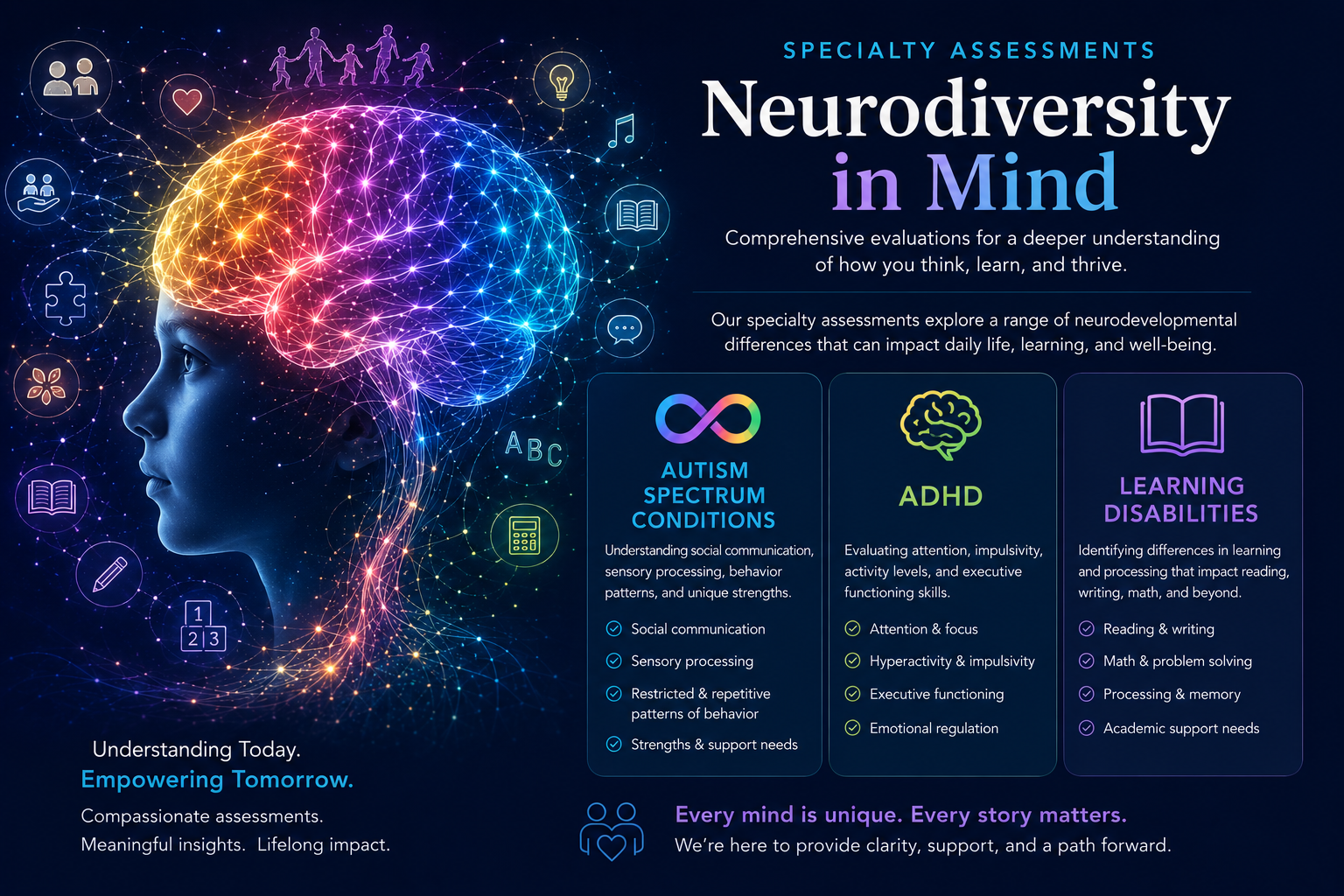
Clinical Specialty Evaluations for children and adults
At Holistic Behavioral Health, I am dedicated to supporting individuals and families as they navigate the unique challenges and strengths of neurodiversity and mental health. My services are available to residents of Washington and Florida and include:
Evaluation Services: Comprehensive assessments helps identify learning difficulties, autism spectrum disorder (ASD), and ADHD. Assessment clarifies strengths and identifies needs for intervention with the goal to improve learning potential.
Behavioral Therapy: Customized, evidence-based interventions designed to address social, emotional, and behavioral challenges, fostering resilience and personal growth.
A Holistic Approach: Combining science and compassion, My practice integrates cross-cultural insights and developmental understanding to create personalized care plans.
I am committed to empowering individuals and families to thrive by fostering understanding, acceptance, and growth.
Start Your Journey Today
Take the first step toward understanding and growth. Contact Holistic Behavioral Health to schedule an evaluation or consultation. Whether you’re seeking answers, support, or a path forward guidance is available at Holistic Behavioral Health.
📞 Call : WA(206)715-5762 or FL(941)-545-0049
📧 Email : drcarroncherrie@holisticbehavioralhealth.org
🌐 Visit my website: https://holisticbehavioralhealth.org
Empowering individuals and families—because everyone deserves to thrive.
Client Stories of Hope and Healing
Holistic Behavioral Health lives up to its name. Dr. Cherrie approaches therapy with professionalism, empathy, and a deep understanding of human behavior. I always feel respected, supported, and encouraged in my healing process.
Dr. Cherrie has a unique ability to combine deep professional expertise with genuine compassion. Her holistic approach helped me understand not only my thoughts and behaviors but also how different areas of my life are connected. Every session felt purposeful, supportive, and empowering.
What I appreciate most is how she listens without judgment and offers thoughtful insights that truly help you grow. She provides practical strategies while also encouraging self-reflection and personal strength.